Showing posts with label White-eye. Show all posts

Tuesday, 8 August 2023

Oriental White-eye aka. Indian White-eye @ Uttarakhand, North India

Oriental White-eye aka. Indian White-eye (Zosterops palpebrosus) is a colorful, attractive and active bird among many hundred of bird species can be found in the state of Uttarakhand, North India.

The photos were taken using Nikon D500 paired with Nikkor 500 PF lens, ISO 1600, F 6.3, EV -1.7     

Bird Photography and Bird Watching in India

Bird photography in India has been getting very good attention and has captured overwhelming response from the local and foreigners alike. This can be witnessed by number of professional, enthusiast, serious hobbyist and beginners, men and women bird photographers and bird watchers at any birding location in the country.

Bird photography and bird watching business ecosystem have been mushroomed throughout the country. That includes, lodges built in the middle of the jungle, hides, birding tours and bird guides. It has become one of the upcoming lucrative businesses in the country which attracts both local and foreign bird photographers and bird watchers. 

Why Uttarakhand

Uttarakhand means "Northen Land" in Hindi. Geographically, state of Uttarakand is located in the Northen part of India, with four seasons weather. It borders with China to the North, Nepal to the East and state of Uttar Pradesh to the South. Uttarakhand has an impressive biodiversity, both flora and founa. Approximately 85% of Uttarakhand state is mountainous and 65% of the total area is covered by forest; from glaciers at the highest elevations to subtropical forest at the lowest elevations, with the elevation ranging from 1,500 meter to 5,000 meter above sea level. The factors have been primary reason for Uttarakhand to be home for many unique and exotic birds, both endemic and migratory species. 

Best time to visit Uttarakhand

For purpose of bird photography and bird watching, the best time to visit the state is during winter; from November to March. During this period, temperature is between 10 - 18 degree centigrade during day time and it goes down to between 0 - 5 degree centigrade during night time and early morning. Hence, prepare for suitable clothing. No rain is expected during this period hence, outdoor activities can be carried out whole day long.

Chopta is also known as "Mini Switzerland" has colder temperature with snowfall during winter as it located in higher altitute. Hence, prior arrangement is needed during winter as it is a peak season for tourists arrival, for both local and foreign tourists. 

Exciting Bird Photography and Bird Watching Locations

Exciting bird photography and bird watching locations include Sattal and Bhintal which can be reached in approximately two hours drive from the airport, Pantnagar. Pangkot which can be reached in just approximately one and half hour drive from Sattal town. Chopta is also another great location. 

How to go to Uttarakhand

Uttarakhand can be reached in approximately one hour by plane from Delhi to a small airport at Pantnagar town. It takes two hours drive from Pantnagar airport to Sattal or Bintal town. Alternatively, train service which takes 6 hours from Delhi to Ramnagar town. Bus service from Delhi to Uttarakhand is also available. 

As for Chopta, it is recommended to go by plane from Delhi to Dehradun airport which takes approximately one hour. From the airport it takes five and half hours drive to Chopta. 

Best Way to Go

Both local but non-native to Uttarakhand and foreign bird photograpers and bird watchers, prior arrangement with local bird guide is highly recommended as transportation to go places and knowledge on locations of specific species of birds are needed to ensure satisfactory result.




Tuesday, 7 February 2023

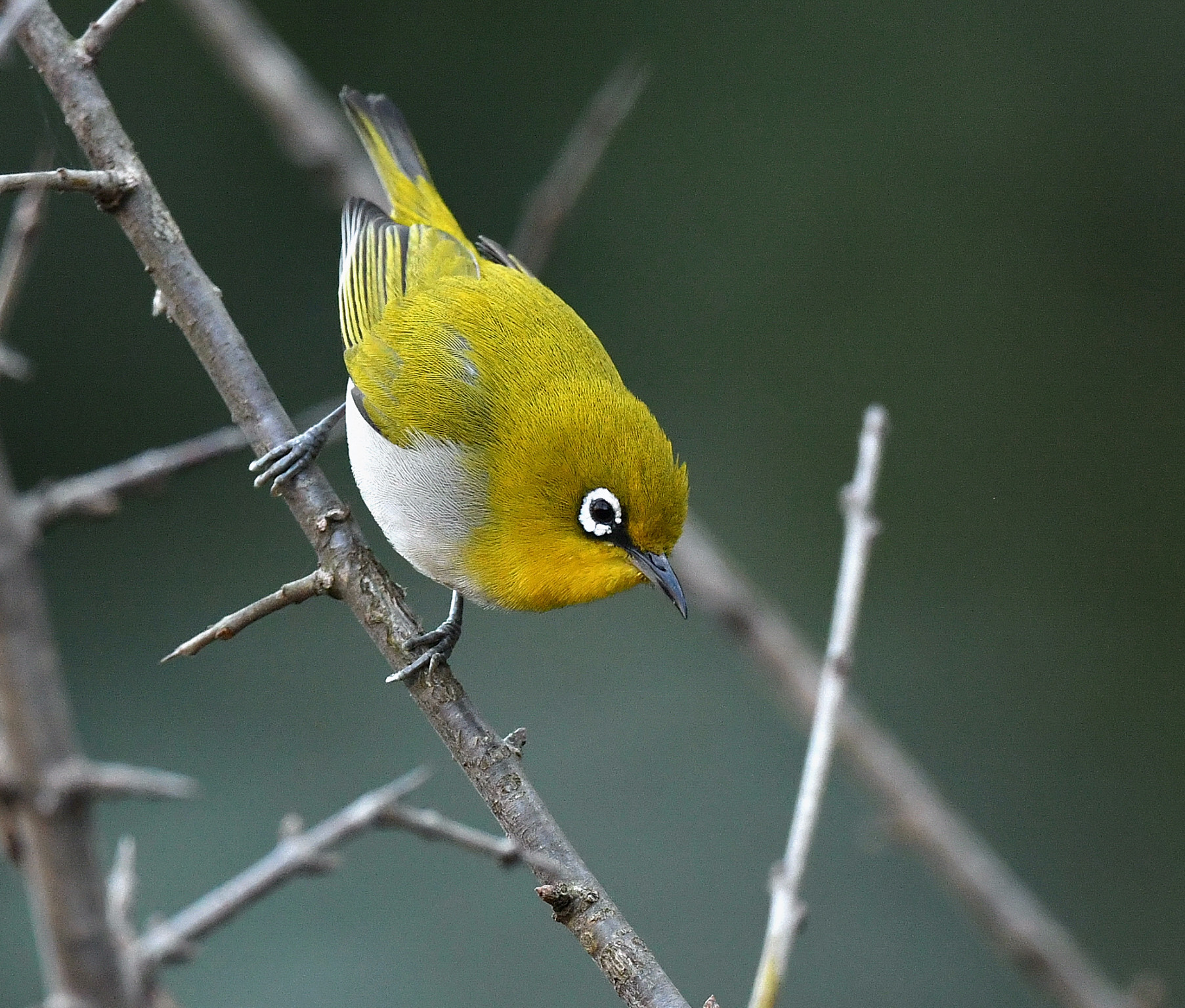
Indian White-eye aka. Oriental White-eye @ Uttarakhand, North India

Indian White-eye aka. Oriental White-eye (Zosterops palpebrosus) is a colorful, attractive and active bird among many hundred of bird species can be found in the state of Uttarakhand, North India.

The photos were taken using Nikon D500 paired with Nikkor 500 PF lens, ISO 1600, F 6.3, EV -1.7     

Bird Photography and Bird Watching in India

Bird photography in India has been getting very good attention and has captured overwhelming response from the local and foreigners alike. This can be witnessed by number of professional, enthusiast, serious hobbyist and beginners, men and women bird photographers and bird watchers at any birding location in the country.

Bird photography and bird watching business ecosystem have been mushroomed throughout the country. That includes, lodges built in the middle of the jungle, hides, birding tours and bird guides. It has become one of the upcoming lucrative businesses in the country which attracts both local and foreign bird photographers and bird watchers. 

Why Uttarakhand

Uttarakhand means "Northen Land" in Hindi. Geographically, state of Uttarakand is located in the Northen part of India, with four seasons weather. It borders with China to the North, Nepal to the East and state of Uttar Pradesh to the South. Uttarakhand has an impressive biodiversity, both flora and founa. Approximately 85% of Uttarakhand state is mountainous and 65% of the total area is covered by forest; from glaciers at the highest elevations to subtropical forest at the lowest elevations, with the elevation ranging from 1,500 meter to 5,000 meter above sea level. The factors have been primary reason for Uttarakhand to be home for many unique and exotic birds, both endemic and migratory species. 

Best time to visit Uttarakhand

For purpose of bird photography and bird watching, the best time to visit the state is during winter; from November to March. During this period, temperature is between 10 - 18 degree centigrade during day time and it goes down to between 0 - 5 degree centigrade during night time and early morning. Hence, prepare for suitable clothing. No rain is expected during this period hence, outdoor activities can be carried out whole day long.

Chopta is also known as "Mini Switzerland" has colder temperature with snowfall during winter as it located in higher altitute. Hence, prior arrangement is needed during winter as it is a peak season for tourists arrival, for both local and foreign tourists. 

Exciting Bird Photography and Bird Watching Locations

Exciting bird photography and bird watching locations include Sattal and Bhintal which can be reached in approximately two hours drive from the airport, Pantnagar. Pangkot which can be reached in just approximately one and half hour drive from Sattal town. Chopta is also another great location. 

How to go to Uttarakhand

Uttarakhand can be reached in approximately one hour by plane from Delhi to a small airport at Pantnagar town. It takes two hours drive from Pantnagar airport to Sattal or Bintal town. Alternatively, train service which takes 6 hours from Delhi to Ramnagar town. Bus service from Delhi to Uttarakhand is also available. 

As for Chopta, it is recommended to go by plane from Delhi to Dehradun airport which takes approximately one hour. From the airport it takes five and half hours drive to Chopta. 

Best Way to Go

Both local but non-native to Uttarakhand and foreign bird photograpers and bird watchers, prior arrangement with local bird guide is highly recommended as transportation to go places and knowledge on locations of specific species of birds are needed to ensure satisfactory result.


Friday, 3 April 2020

Oriental White-eye aka. Indian White-eye @ Ranthambore National Park, Rajasthan, India

Oriental White-eye (Zosterops palpebrosus) aka. Indian White-eye is a colorful, attractive and active bird among many hundred of bird species can be found in Ranthambore National Park. It can be found at lower elevation in the forest of the park.  

Ranthambore National Park

Ranthambore National Park needs no introduction to the world. It is famous for Royal Bengal Tiger, the biggest wild cat alive today. The park has the most tiger population per square kilometer and it is also the largest national park in the state of Rajasthan, India. Originally as project tiger reserves in 1973, the park was declared as National Park on 1 November 1980. 

Inside the Ranthambore National Park, the UNESCO World Heritage Site, Ranthambore Fort is situated. 

How to get to Ranthambore National Park

Located in a small town called Sawai Madhopur, the park can be reached in approximately 3.5 hours by car from Jaipur international airport for a distance of about 160 km. Train and buses are also available mode of transportation from Jaipur to Sawai Madhopur. 

Although Sawai Madhopur is a small town, to cater for both local and foreign tourists visiting Ranthambore National Park, there are abundant hotels, resorts, villas and guesthouses of different standards and prices. Not forgetting restaurants, cafe, convenience shops of all kinds and standards.  

Best time to visit Ranthambore National Park

For a purpose of tiger sighting, the best time to visit the park is during summer; from April to June. During this period the temperature can go up to 40 - 48 degree centigrade. Hence get ready with suitable clothing and a lot of water. Summer generally is non-peak period for Ranthambore National Park as tourists try to avoid very hot weather. However, for serious animal or tiger lovers and wildlife photographers, this is the best period to capture the mammal as they come out to find water at the designated water points.

The peak period where most tourists visit the park is during winter, from November to February where the temperature can drop to 4-10 degree centigrade in the early morning and below 15 in the afternoon. 

Ranthambore National Park is closed during monsoon season, from July to September and it is coincide with a mating season for the tigers. 

Safari at Ranthambore National Park

Safari can be pre-booked or booked from the local agents in the small town of Sawai Madhopur. However, it is advisable to pre-booked the safari as it may be fully booked and the price may be hiked during the peak season. Generally, there are two type of vehicles for safari which allowed to enter into the park, a small jeep with maximum 6 passengers, with a driver and a guide. The other type of vehicle is called Canter, a larger 20-seater modified vehicle. Both vehicles are opened top vehicle. 

The desired type of vehicle can also be chosen during the booking is made as it is different in price. 

For serious wildlife photographers, a small jeep is much desirable as vehicle can move much faster and can enter smaller roads to find animals in the park. 

The Untold Rules of Safari at Ranthambore National Park

Although the total area of the park is approximately 1,300 square kilometers, only less than 30% is opened to public. The area that opens to public is divided into 10 zones, Zone 1 - 6 are considered premium zones where possibility of sighting tiger is better than other zones and they are nearer to the town. Zone 7 -10 cover more hilly and rocky areas with less chances to sight the tigers and it takes about one hour to reach the entrance of the zone from town where hotels are located. 

Although, the zone for each safari vehicle visits is determined by the forestry department officer based on computerized system, speak to local agent where booking is made for desired zones. Beware, some local agents will charge more for the arrangement to enter the premium zones. 

Secondly, the park is opened in two time slots, morning from 6.30 a.m. to 10.00 a.m. and afternoon from 2.30 p.m. to 5.30 p.m. At the end of each time slot, all safari vehicles must exit the park. Hence, the effective duration for safari for each time slot is only 2 hours. As such, arrange safari vehicle for early pickup so the jeep will be at the entrance of designated zone as it opens.  

For serious wildlife lovers and photographers, request for the entire day safari without exiting the park can also be made at the local agent where the booking is made so as to allow more time to search for animal in the park. However, do expect much more expensive fee. 

What to expect in Ranthambore National Park

Visitors to the park expect to see the Royal Bengal Tiger. During summer, the chances to sight this mammal is more than 70% whist only 30% chances during winter. Besides tiger, for wild cat family, leopard, caracal and jungle cat can also be found here. 

Other common animal can be sighted in the park include spotted deer, sambar deer, antelope, gray langur just to name a few. 

The park is also a home to more than 350 species of birds, 40 species of mammal and reptiles and few hunred species of plants.


Tuesday, 30 July 2019

Everett's White-eye @ Fraser's Hill, Pahang, Malaysia

Everett's White-eye (Zosterops everetti) is yet another super active, super fast but attractive bird among few hundred species of birds can be found in Fraser's Hill, Pahang, Malaysia. The bird usually can only be sighted when certain tree is fruiting in the Hill. 

Fraser's Hill is definitely one of the best birding destinations in Malaysia and in Asia as it is a residence to many exotic birds. The hill covers a large area of tropical rain forest, waterfalls, trekking and streams. There are abundant accommodations, food and recreational activities provided at the HillIt can be reached in approximately two hours from Kuala Lumpur by car. Fraser's Hill has the largest bird population and varieties. It certainly entices many birders from all over the world to be there. The main target birds in Fraser's Hill include different types laughingthrush, broadbills, cuckoos, flycathers, woodpackers, barbets, babblers, Niltavas, Minivets and Trogons just to name a few. 

As part of it's promotion and global recognition, Fraser's Hill holds Fraser's Hill International Bird Race annually. The hill is truly a heaven for bird and nature lovers.